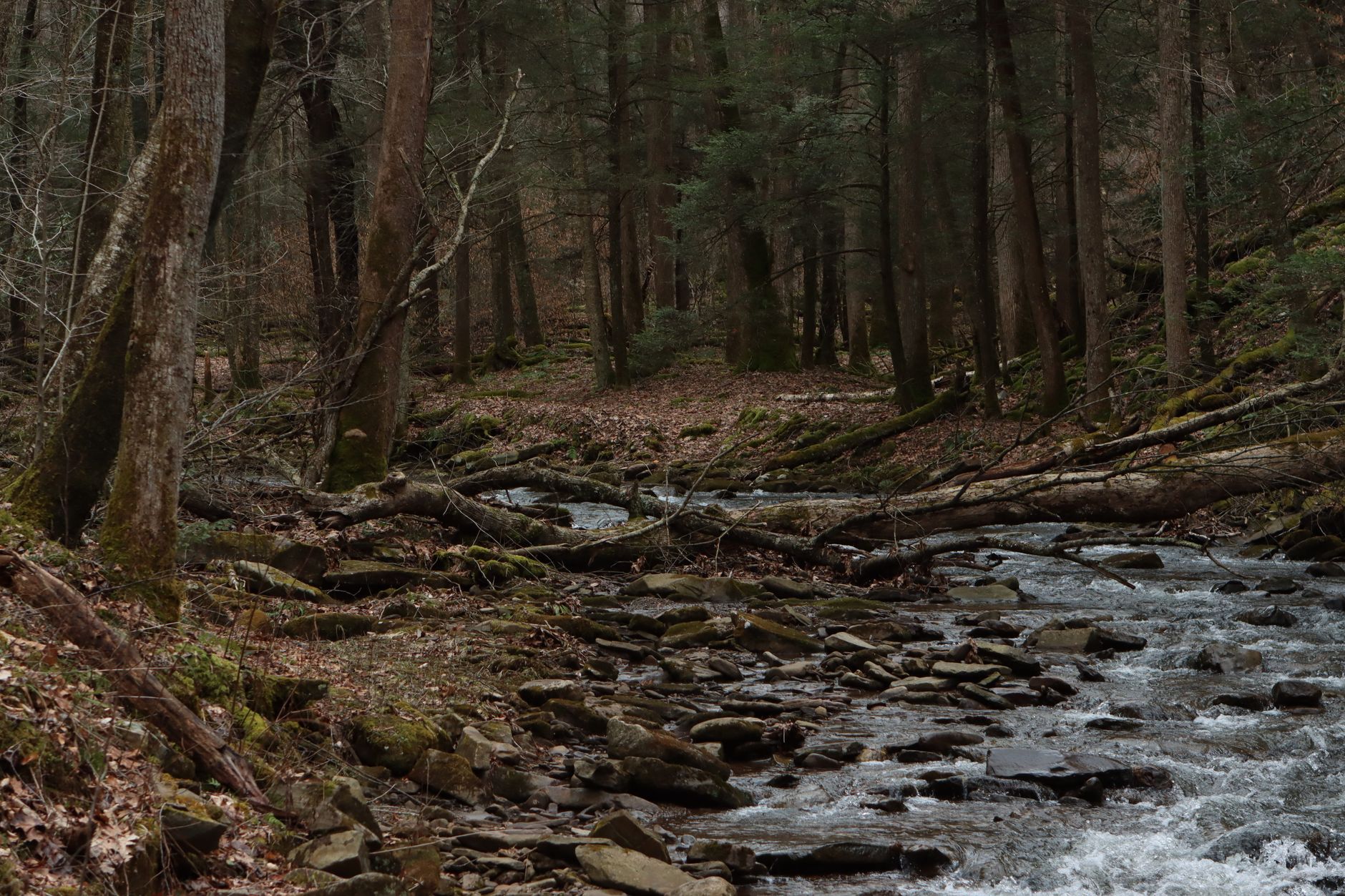
West Virginia is emerging as an outdoor destination through its natural beauty and a coordinated effort to transform its outdoor resources into economic growth.
The moment that changed everything
In 2021, Corey Lilly was hiking near his office in Beckley when he noticed a family from Colorado struggling with a climbing app. They had traveled for the New River Gorge’s reputation but detoured to Beckley’s Piney Creek Crag after hearing it was better suited for children. Lilly directed them to a nearby climbing gym with homemade ice cream before watching them continue down the trail.
That encounter marked a turning point for him. At the time, Lilly served as Beckley’s founding director of outdoor economic development. The interaction proved his efforts were working: a network of protected lands, trails, and climbing routes built on reclaimed coal mines abandoned decades earlier.
The Piney Creek Preserve now covers 613 acres, featuring 30 miles of multi-use trails, three waterfalls, and plans for a whitewater kayak launch. The project convinced skeptical city officials that outdoor recreation could deliver real benefits—and earned Lilly a new role as West Virginia’s first Manager of Outdoor Community Development in 2023.
A state investing in its natural strengths
Lilly’s work aligns with a larger initiative led by the Outdoor Economic Development Collaborative (OEDC). The statewide effort received a $25 million donation from Brad Smith, the former CEO of Intuit, and his wife, Alys. The OEDC’s Ascend program offers $12,000 to out-of-state residents who relocate to one of six designated regions, along with free outdoor gear and guided experiences. Over 1,400 people have accepted the offer.
Smith, who grew up in the state, said the pandemic demonstrated how remote work and outdoor recreation could revitalize rural economies.
Related: Rob Lea Completes Double Seven, 100 Jellyfish Stings
For years, West Virginia’s outdoor potential remained underdeveloped. Volunteer groups and nonprofits advocated for trails, climbing access, or ATV routes but rarely collaborated. The OEDC seeks to change that by uniting communities, state agencies, and private partners under a single strategy. A team of 20 provides consulting, grants, and technical support to projects like Beckley’s Piney Creek Preserve, which now draws climbers, hikers, and mountain bikers.
The model resembles successful efforts in Colorado’s ski towns and Utah’s national parks but stands out for its affordability. A family can rent a cabin near the New River Gorge for a fraction of the cost in Moab or Jackson Hole. That affordability forms part of the appeal to remote workers and outdoor enthusiasts who might otherwise overlook the state.
From coal country to trail town
Lilly grew up on a farm near Beckley, where his family has lived for ten generations. His great-grandparents owned a coal mine, and most older relatives worked in the industry before its collapse in the 1990s. Lilly spent his childhood exploring the woods, fishing, and skiing, unaware of the economic decline around him. A head injury ended his professional skiing career in his early 20s, but by then, he had traveled enough to recognize West Virginia’s unique value—and its untapped potential.
After graduating from West Virginia University in 2017, he helped develop access to Kanawha Falls, a privately owned whitewater spot, and launched a kayaking competition that drew paddlers from 13 states. That project brought him to the attention of Beckley’s leaders, where he now works to convert the state’s outdoor assets into jobs and tourism revenue.
His local roots give him credibility. Lilly’s deep family history and commitment to living in the state help him gain trust from officials and community members. That trust is essential in a place where many residents remain wary of outsiders and government programs. Lilly’s track record of successful projects and his background as an athlete further bridge the gap.
A town’s transformation
Marlinton, a town of 800 near Snowshoe Mountain Resort, exemplifies the OEDC’s impact. When Mayor Sam Felton took office in 2015, the town was struggling. The timber industry had collapsed, businesses were closing, and homes sat vacant. Felton, a former service station owner, saw potential in outdoor recreation. Snowshoe’s expansion into mountain biking was attracting riders, and Marlinton’s location—straddling the Greenbrier River with nearby ridgelines—made it a logical extension.
Related: Looking For The Right Brassiere Size For You
Felton began advocating for outdoor projects around 2010, facing skepticism from residents. He persisted, building a coalition that included the Monongahela National Forest, the OEDC, and the International Mountain Biking Association (IMBA). The result was the Monday Lick Trail System, a 30-mile network that opened in 2025 and helped Marlinton earn an IMBA Trail Town designation this year.
The town has since undergone a revival. A revamped opera house, a bike shop in a former grocery store, murals celebrating local history, and plans for a food truck court and pump track have all taken shape. A longtime resident donated land for the trailhead after witnessing the town’s renewal. Felton recalled the donor saying, “Sam, when you started out, I didn’t know what to think, but you’ve made me a believer.”
The economic benefits are becoming clear. Riders spend an average of $1,000 per visit, and achieving a gold-level IMBA designation could quadruple overnight stays. Marlinton’s story reflects the OEDC’s broader vision: using outdoor recreation to create jobs, attract new residents, and give young people reasons to stay.
Challenges remain
The OEDC continues its work across the state. Current projects include a bike park in Morgantown with an adaptive pumptrack, a statewide waterfall trail, and the East Coast’s largest gravel network in the Monongahela National Forest. In Beckley, Lilly is expanding trails and climbing routes, while Felton pushes for more downtown improvements in Marlinton.
Lilly’s goal is straightforward. The stakes, however, are significant. West Virginia faces economic challenges and population decline. Outdoor recreation alone won’t solve these issues, but it offers a starting point—one that could keep families returning to the trails he helped build.
