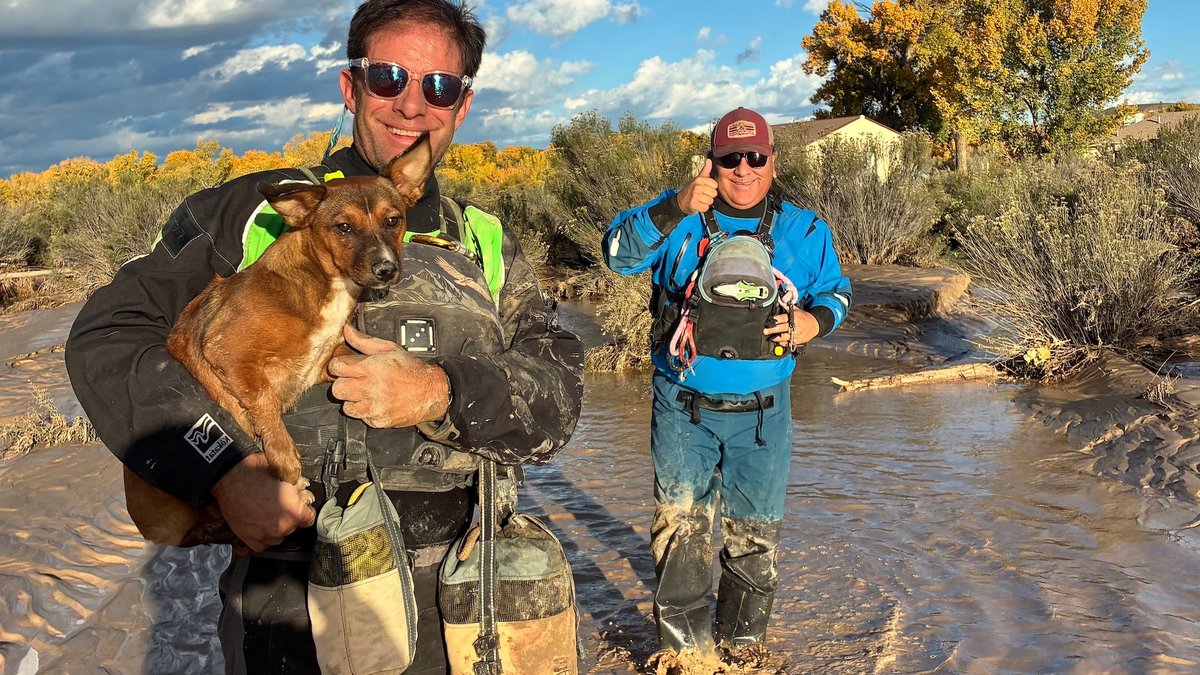
Heavy rains in western New Mexico turned streets into rivers on Oct. 23, prompting a local rafting outfit to launch an impromptu rescue for stranded pets amid the rising waters.
Guides turn rafts into rescue vessels
Whitewater instructor Ryan Dudgeon emerged from waist-deep quicksand, her pink drysuit coated in desert mud, after towing a 14-foot inflatable through the submerged avenues of Farmington.
Alongside her husband Cody, the pair run Desert River Guides, a business that normally works through the Animas and San Juan rivers. Their training in swift-water techniques qualified them to enter areas inaccessible to standard responders.
With direction from the regional animal shelter and city officials, the couple converted their commercial warehouse into a temporary holding area for lost companions, setting up crates and bedding on the floor of the former guide shop.
Equipped in dry suits, the volunteers loaded the raft onto a van and entered neighborhoods still under water, pulling the vessel through flooded lanes while wading on foot where currents allowed.
They retrieved dozens of dogs, cats, and smaller critters left behind in homes and corrals. The agricultural surroundings meant they also encountered livestock, though many larger animals, such as goats, could not be reached and perished in the surge.
“We are the only ones in the county qualified to do anything like this, aside from Search and Rescue,” Ryan, 41, said over the phone.
Read Also: Reno Tahoe Blends Urban Life with Outdoor Adventure
Record flow rates shatter norms
River discharge peaked at unprecedented levels. The Animas River, which typically runs between 1,000 and 4,000 cubic feet per second (CFS), surged to about 12,000 CFS on Oct. 26. Downstream, the San Juan River hit a high of roughly 33,500 CFS, far exceeding its usual 500 CFS.
Residents recalled the 1911 centennial flood as a benchmark, yet many believed rumors of a dam breach were false; the deluge stemmed solely from swollen waterways.
Upstream communities, including mobile-home parks in Bloomfield and villages along the Navajo Nation, faced homes washed off foundations, some ending up on bridges or riverbanks.
A makeshift sanctuary
The converted warehouse now shelters rescued chickens, rabbits, cats, dogs, and other animals awaiting permanent homes. Volunteers have arranged crates on the concrete floor, providing bedding and water while the space doubles as a temporary lodging for displaced residents.
Inside the building, community members sleep on camping gear left over from guided trips, gather around a pool table, and prepare meals on portable stoves. Ryan, who also teaches elementary school, said she will serve as a “face of hope” for her fourth-grade class, promising to keep daily routines as normal as possible.
Ryan believes their guide shop will store animals—chickens, cats, dogs, rabbits, and more—for weeks to come.
Wider regional impacts
Across the Four Corners area, rockslides forced the closure of popular trails, including Bridal Veil Falls in Utah, while Lake Powell’s surface rose at least ten feet as floodwaters backed up into the reservoir.
