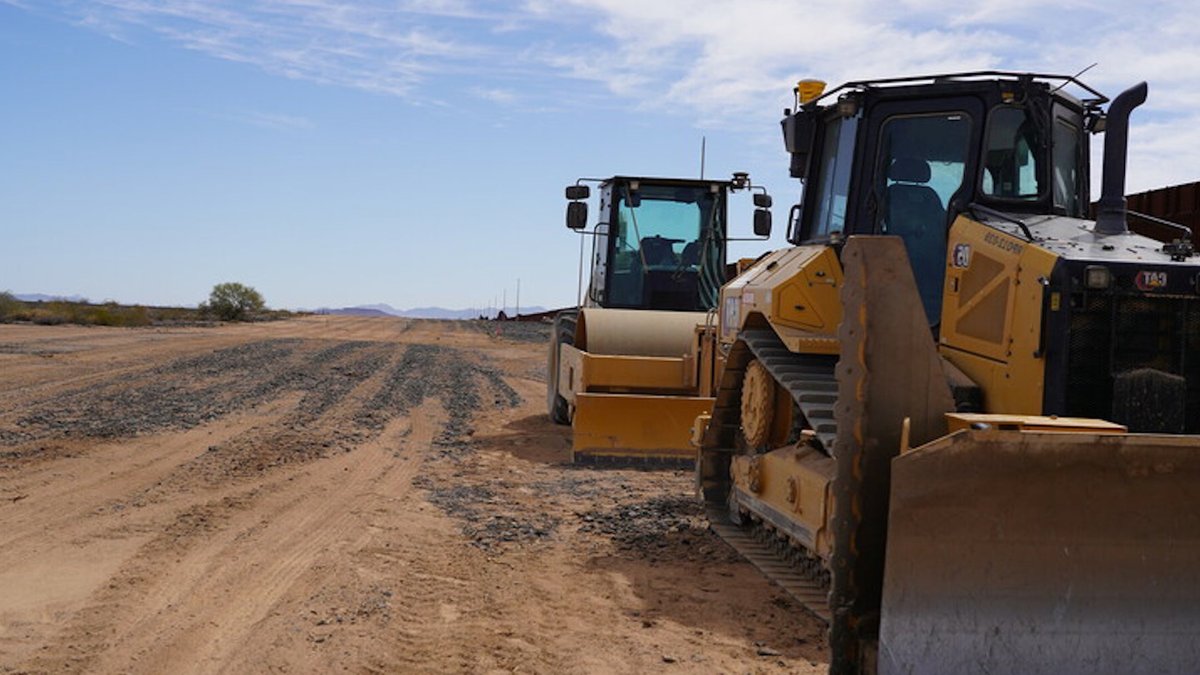
The Las Playas Intaglio, a 272-foot rock carving in the Sonoran Desert, has been severely damaged by border contractors. The ancient geoglyph, which is estimated to be around 7,000 years old, was plowed through by a bulldozer in April to build the Trump Administration’s border wall.
Archaeologists have recently dated the intaglio and believe it to be 6,000 years older than previously thought. This makes it the oldest dated geoglyph in the Americas, predating England’s Stonehenge by 1,500 years and Egypt’s ancient pyramids by around 2,000 years.
Destruction of the Intaglio
Russ McSpadden, a southwest conservation advocate at the Center for Biological Diversity, described the damage to the intaglio as a severe blow to shared human history. He said that about 30 percent of the intaglio was damaged, with the fish’s head being severed from its body.
U.S. Customs and Border Protection has stated that it has secured the remaining portion of the site and is protecting it in place. However, the agency has not commented on the extent of the damage.
Broader Threat to Public Lands
Advocates like McSpadden warn that the destruction of the Las Playas Intaglio highlights a broader threat facing public lands, desert ecosystems, and Indigenous heritage sites. The federal government’s plans for additional border wall enhancements have raised concerns about the potential destruction of other cultural sites.
Intaglios, such as the Las Playas Intaglio, are geoglyphs that were scraped into desert pavements and were used for religious rituals. The Las Playas Intaglio is located in an ancient lava field along the U.S.-Mexico border and is visible from space.
Impact on Indigenous Heritage
The intaglio lies on the Cabeza Prieta National Wildlife Refuge in Arizona, which is on the ancestral lands of the Tohono O’odham Tribe. The refuge encompasses over 800,000 acres of undesignated wilderness and is a winter hiking destination.
The area is also home to the Arizona National Scenic Trail, an 800-mile hiking route that spans from Mexico to the Arizona-Utah border. Nearby Organ Pipe Cactus National Monument is known for its dark skies, camping, and 28 miles of established hiking trails.
McSpadden said that the wildlife refuge is a unique feature of the Sonoran Desert and that the border wall construction has disrupted the connection between the refuge and the surrounding protected areas.
The U.S. Department of Homeland Security has issued waivers to expedite border wall construction, setting aside dozens of environmental, cultural, and public health laws.
U.S. Customs and Border Protection said that it “continues discussions with the tribe.”
