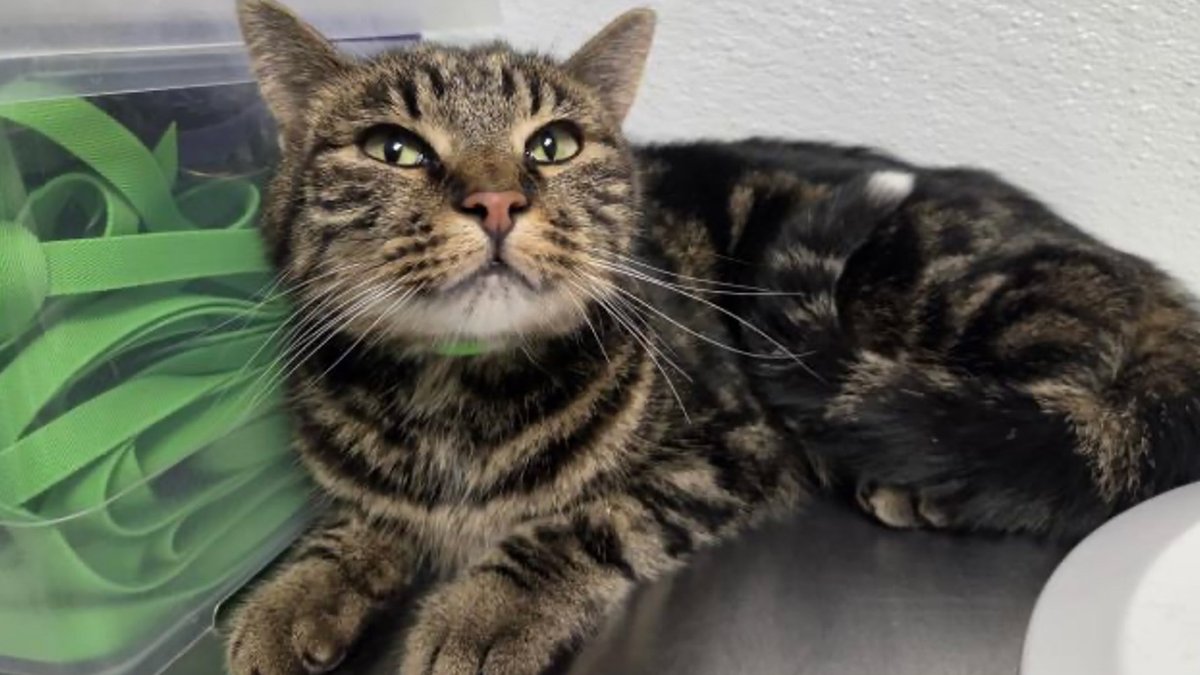
A house cat named Fridge survived 39 days alone in the backcountry near Colorado’s Great Sand Dunes National Park after vanishing from her owners’ tent on June 2. The three-year-old cat endured high temperatures, lack of food and water, and the presence of predators, astonishing her owners and raising concerns about how an indoor cat managed to stay alive for nearly six weeks.
Fridge’s owner, Na-Kee Bullen, said she had given up hope of finding her cat after searching for eight hours with her boyfriend, Jefferson Howard. “There’s no way that this tiny little cat survived this long with no food, no water,” Bullen told Outside.
Bullen woke up at 5:30 A.M. on June 2 to find the tent cracked open and Fridge gone. She and Howard searched the surrounding area, calling Fridge’s name and setting out treats, but to no avail.
They eventually posted signs, called the local shelter, and got back on the road to Minnesota without Fridge. Howard wrote on his Instagram, “Not even in my worst nightmare could I have guessed this could happen. It was so awful and felt like a piece of me was gone.”
On July 11, Bullen received a call from Howard, who told her that someone had found Fridge. Bullen drove 16 hours through the night to Colorado’s San Luis Valley, where the animal shelter was located.
When she arrived, she found Fridge frail and underweight, with scarred paws and worn nails. The vet found dried blood under Fridge’s toes that wasn’t hers, suggesting that she had been killing mice or small rabbits to survive.
Bullen said, “I wish I had a little GoPro on her so I could see what she was doing, what kind of animals she ran into and how she survived.” Fridge likely lived off insects, as well as small rodents and other animals, in the park.
Related: Hiker Survives Brutal Colorado Mountain Ordeal
Great Sand Dunes is home to over 1,000 known species of arthropods, including at least five beetle species found nowhere else on Earth. They are also home to coyotes, mountain lions, black bears, bobcats, and golden eagles.
Bullen said, “Driving into that campsite, we saw deer, coyotes, all different kinds of animals. I’m like, how did you survive 40 days with all of these predators?” Fridge had to watch her back to stay alive.
Despite her ordeal, Fridge is still as affectionate as ever. However, she has become more food-driven, jumping up on the counter to steal chicken breasts.
Bullen said, “Fridge is a fighter. She really is.” Bullen is unsure if she will take her cats camping again, but if she does, she plans to use AirTags and make them sleep in their harnesses.
For now, Fridge is safe and sound, and her owners are grateful to have her back. It’s likely that Fridge’s experience in the wild has changed her, and she may have developed new survival skills, such as running efficiency in a new environment.
Fridge was not as food-driven before, and her new behavior may be a result of her time in the backcountry. Her story is one of survival and resilience, and shows the strength and adaptability of domesticated cats in the wild.
She is home now.
