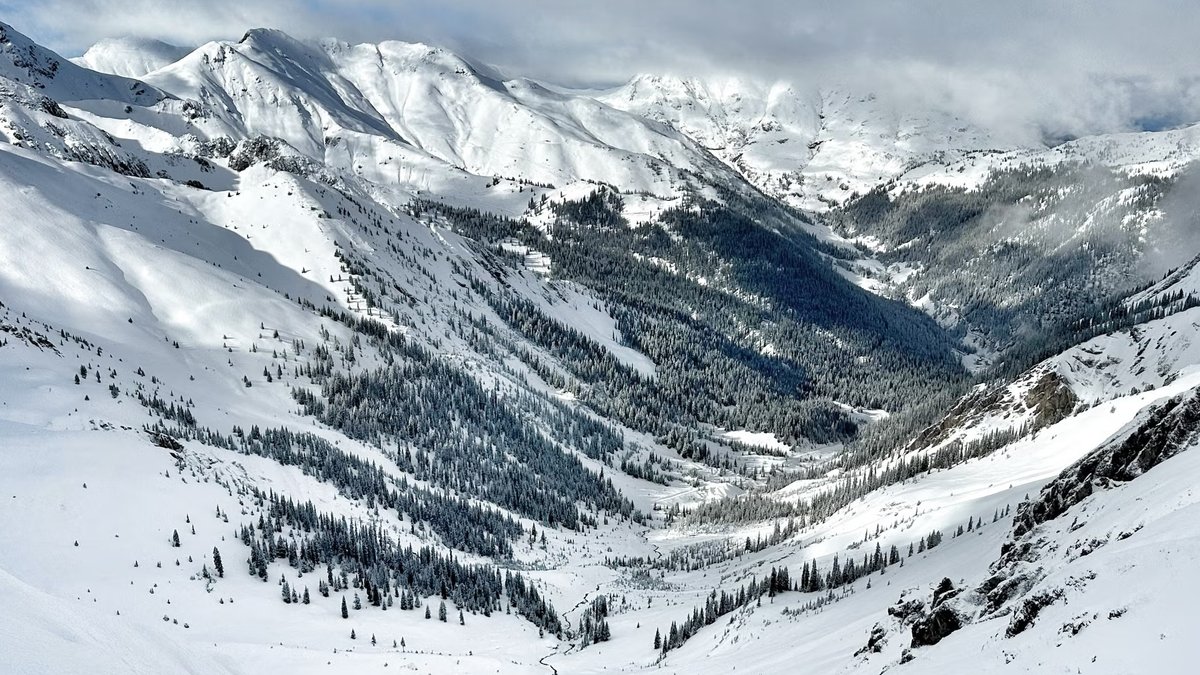
Nearly 100 avalanches have been recorded in Colorado, with safety officials warning that early-season skiers face significant dangers due to unusual weather and shallow snowpack. The Colorado Avalanche Information Center (CAIC) has reported multiple close calls, including an incident where a skier was swept 500 feet down a mountainside near Silverton, Colorado.
The skier, whose name and age are unknown, was unharmed after being partially buried by the avalanche, according to professional skier and filmmaker Colter Hinchliffe, who captured the incident on video. This incident is among several early-season avalanche close calls in the Mountain West so far in 2026.
Unstable Snow Conditions
As of November 6, the CAIC recorded nearly 100 avalanches statewide, including 15 triggered by skiers, Brian Lazar, CAIC deputy director, said. Lazar noted that the number of avalanches at this time of year is not unusual, given that the state is in avalanche season, despite the snowpack still developing.
Lazar warned that early-season avalanches can be dangerous even when they’re relatively small, particularly with so little snow covering the terrain. He emphasized that shallow snow can lead skiers into more dangerous terrain, as they are naturally drawn to areas with the best snow coverage, which often have the most dangerous avalanche conditions.
Early-season snow blankets the San Juan Mountains above 11,000 feet in southwestern Colorado, where unusually warm, wet storms have contributed to avalanche activity this fall. Hinchliffe said a lot of people in the mountains means a lot of decisions are being made, and some of them can go wrong. “That’s kind of what we saw,” he said.
Weather Contributions
The weather has contributed to unstable snow conditions across Colorado, with two recent warm and wet storms bringing rain to elevations above 12,000 feet in parts of southwestern Colorado, triggering wet avalanches. Between storms, dry periods allowed weak layers of snow to develop on the snow surface, which fresh snowfall later buried.
Lazar recommends that skiers check the local avalanche forecast, carry a transceiver, shovel, and probe, and travel with partners who know how to use them. He also emphasized the importance of avalanche education and regular rescue practice to minimize the risks associated with early-season skiing.
Hinchliffe and his touring partner had deliberately agreed to take a conservative approach, sticking to mellower terrain rather than testing steeper slopes. “At this point, I’ve got the whole season laid out in front of me,” he said. “So when I ski in the early season, I try to be very cautious with my choices.”
Safety Precautions
Lazar warned that even small avalanches can be dangerous, as they can drag skiers across rocks, logs, and other obstacles, causing serious injury. He advised skiers to be aware of the potential dangers and take necessary precautions to stay safe.
