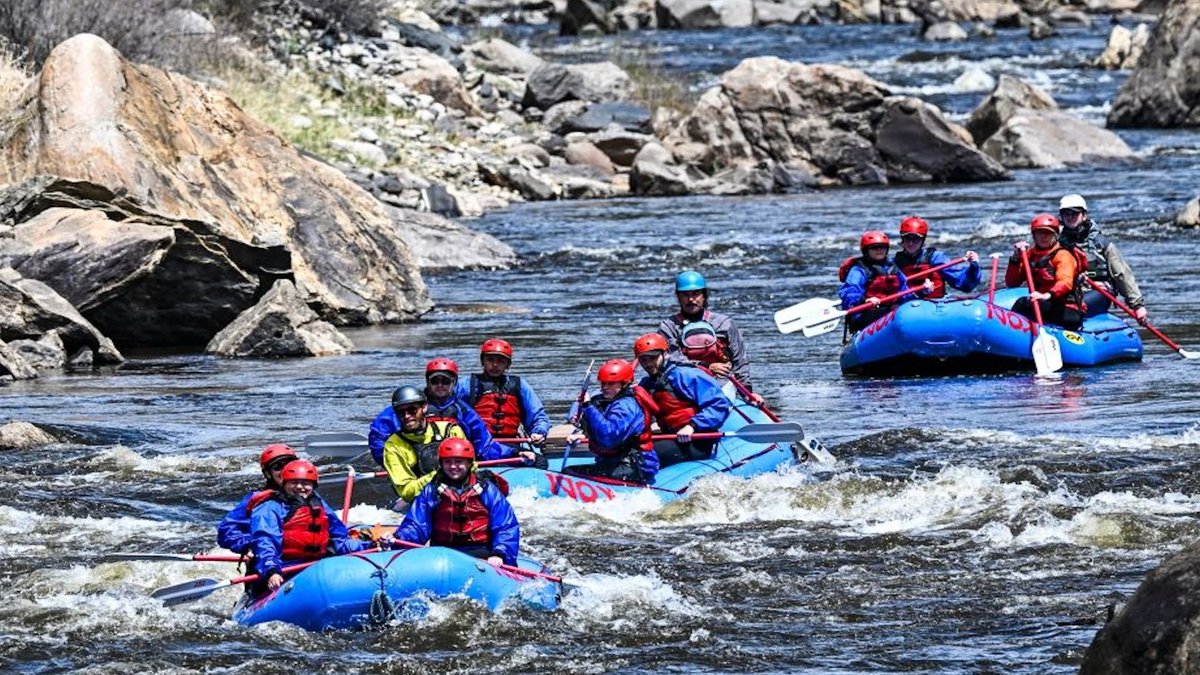
Health officials in Colorado are warning people to stay out of a more than 100-mile stretch of the Arkansas River, one of America’s most popular river recreation destinations, after over 4 million gallons of untreated sewage spilled into the waterway.
Authorities Respond to Pipeline Failure
Authorities with the City of Pueblo say a pipeline failure caused the untreated waste to flow into the river. Health officials then detected extremely high levels of E. coli and other dangerous bacteria, as well as viruses and parasites, as the sewage has made its way down the waterway. It’s unknown when the stretch of the Arkansas River below the spill site will be safe for the public.
The failure involved a wastewater pipe located inside a stormwater pipe, according to the City of Pueblo. The spill happened near the City of Pueblo, and the advisory extends from Fountain Creek 105 miles downstream to John Martin Reservoir, near the Colorado-Kansas state line. Workers stopped the leak on August 27, but sections of the river still contain dangerously high levels of contaminant as of the most recent testing from August 31.
Related: Will Soper Delivers Blood Up Mountain
Pueblo, a city of about 112,000, is one of Colorado’s busiest summer cities for river recreation and has 11 designated public access points along the Arkansas River. The river is known for its whitewater and features several iconic sections managed across the Arkansas Headwaters Recreation Area. About 250,000 commercial rafting visitors explore the Arkansas River in Colorado every summer, according to the Colorado Sun.
Impact on Tourism and Wildlife
However, the busiest whitewater parts of the river—Royal Gorge, Browns Canyon, and Salida—are well upstream from the spill site and likely won’t be impacted, according to Haley Sue Robinson, City of Pueblo director of public affairs. The spill contained water that has not been treated by the water reclamation facility to remove debris, human waste, harmful germs, viruses, parasites, metals, and grease.
Such a large amount of sewage in such a small amount of water also risks making wildlife and livestock sick, could contaminate crops that are watered with it, and has the potential to lead to significant harmful toxic algae blooms, said Gary Belan, senior director of the clean water program at American Rivers. The E. coli threat is likely very high and the potential for health impacts is significant if someone swims in it or swallows it.
Related: Group workouts boost energy in surprising ways
Colorado has been grappling with severe drought conditions that have left the Arkansas River Basin at unusually low flow levels. A historically low snowpack has already stunted Colorado’s angling, whitewater and recreation industries this summer, and such low river flows mean the effects of the spill could be intensified, water officials told the Colorado Sun.
Sewage L
