A few days into a weeklong backcountry skiing trip, a friend guided a hiker through an unfamiliar routine that combined rolling, stretching, and flexing movements aimed at neglected muscles in the feet and ankles. The sequence, learned through Gyrotonic and Gyrokinesis classes, felt like a release after days of strain on steep snow.
Gyrotonic employs specialized equipment to reproduce movements inspired by qigong and tai chi, emphasizing slow, circular actions that move joints through their full range. The system seeks to improve circulation and support cellular repair. By contrast, Gyrokinesis delivers comparable exercises on a stool or mat without any machines. Both approaches treat the body as an interconnected whole, focusing on fluid motion and tissue health.
Leslie Hubbard, a certified Gyrotonic instructor based in Maple Falls, Washington, describes the method as “energetic” and “three-dimensional.” She explains that the aim is to build stability starting from the core and moving outward, rather than isolating individual muscle groups. For hikers, this translates into reduced stiffness, rehabilitation of old injuries, and stronger support for uneven terrain and loaded packs.
The instructor stresses that the practice is not one-size-fits-all. Classes are customized to each participant’s abilities, avoiding forced motions. “Not everybody is the same,” she says. “We look at who is in front of us.” The focus remains on small, controlled movements that feel satisfying instead of painful, allowing each person to progress at a comfortable pace.
Read Also: Border wall damages ancient rock carving
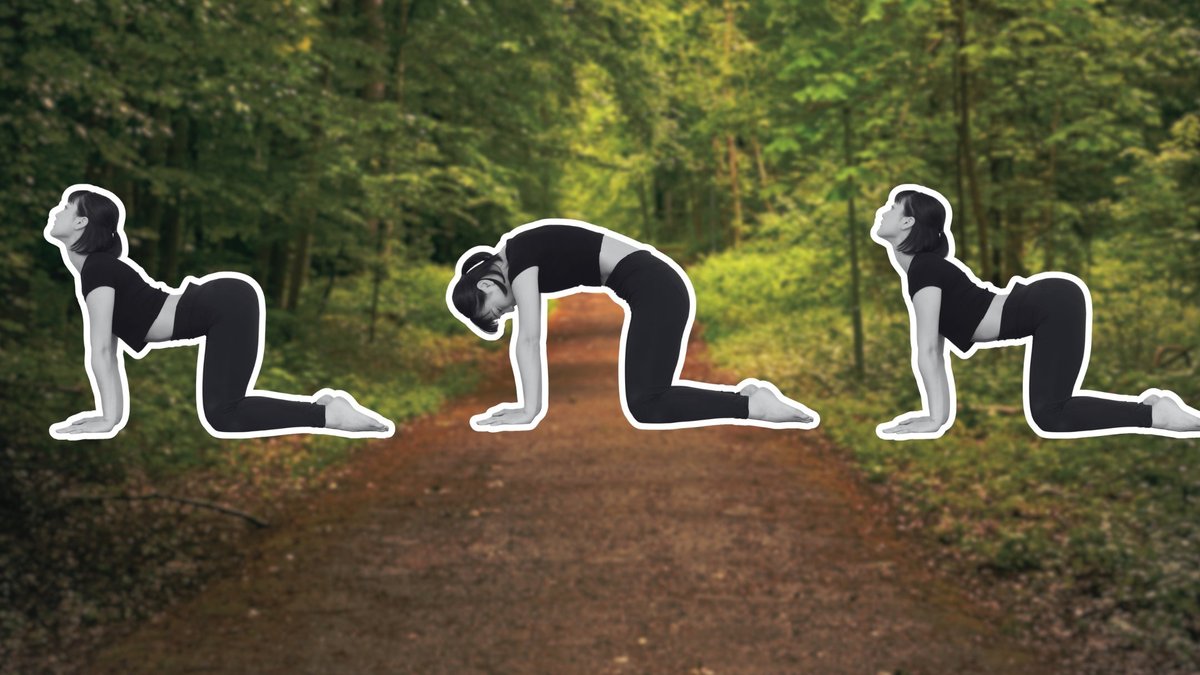
While Gyrotonic requires equipment, Gyrokinesis can be performed anywhere. Hubbard recommends beginning with a seated spine mobilization: arching and curling the spine while driving movement from the pelvis, then spiraling the trunk side to side. The sequence mirrors the cat-cow pose found in yoga but adapts it to a seated position, making it accessible on a trail bench or camp chair.
For the feet, the routine starts with “foot openings,” which involve massaging the sole with the thumbs from heel to toe and focusing on tight spots. Next, each toe is stretched individually, then circled with fingers threaded between them while the ankle remains stable. A final step consists of lightly slapping the sole to boost circulation before shaking the ankle to release any remaining tension.
On flat ground, the next actions include rolling the ankles outward and inward, lifting and spreading the toes, and engaging the foot arch. When standing, the routine finishes with ankle circles performed while leaning on a stool or log, ensuring the core stays engaged throughout. “You want it to feel good,” Hubbard advises. Small ranges of motion are sufficient when they bring relief.
Hubbard notes that the routine typically ends with a brief ankle shake, signaling that the session is complete.
