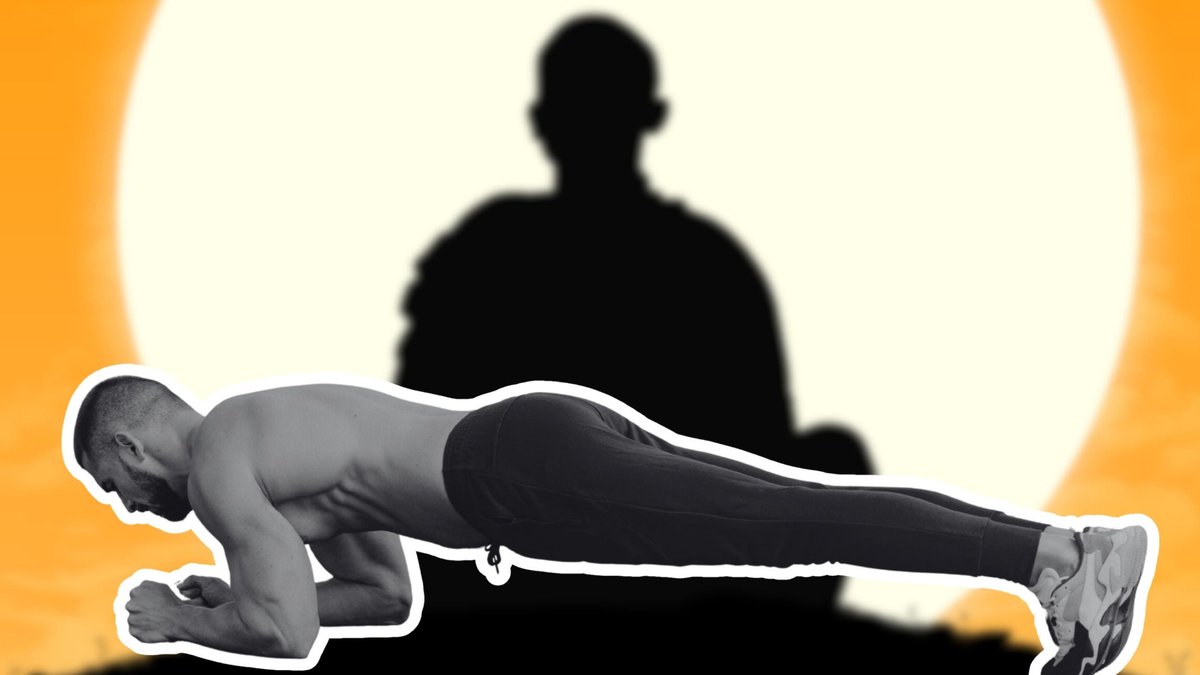
The monk plank challenge looks deceptively simple in the short videos spreading across social media. One arm on the ground, one leg lifted, body suspended in a straight line. A certified personal trainer and outdoor athlete tried it recently and lasted roughly three seconds before realizing she couldn’t even get into the position.
The move is an advanced plank variation that demands significant mobility, balance, strength, and stability. It starts from a runner’s lunge, with one arm hooked around the front leg. From there, the back leg and opposite arm lift to align with the torso, leaving only one hand and one foot touching the floor.
All of your bodyweight rests on a single side, which is what separates it from exercises like the Bird Dog. There’s no diagonal support line to lean on. The goal is to hold perfectly still.
Related: All‑In‑One Camp Kitchen Offers Instant Running Water
Why the Monk Plank Is So Difficult
Getting into the runner’s lunge requires solid hip and ankle mobility, and holding the lifted leg in line with the torso demands serious strength in the glutes, legs, and core. The hips naturally want to rotate, so stability has to be rock‑solid to prevent that.
Supporting most of the load with one arm also tests shoulder and wrist strength. Once the pose is achieved, mental focus becomes part of the equation. Sajedeh Arefi described the effort bluntly in an Instagram video: “It’s one of the toughest poses I’ve ever held. Every second felt like a battle.”
Most people who try the challenge do it once and move on, the trainer noted. It is not the kind of pose that appears regularly in standard workout routines.
What It Does for Hiking, Running, and Climbing
For those who stick with it, the payoff is real. The pose activates the transverse abdominals, core muscles that wrap around the pelvis and spine like a natural corset. Those same muscles help support the weight of a backpack or keep a skier balanced on uneven terrain.
Related: Group workouts boost energy in surprising ways
Core stability protects the spine during movement and lets the body transfer power efficiently between the upper and lower halves. That translation directly aids forward propulsion on a long trek or a run. The movement also builds hip stability, which can reduce the risk of knee pain and injury for people who walk or run outdoors regularly.
For someone who spends weekends on trails, the practical takeaway is simple. A few minutes of this uncomfortable balancing act could mean better form on the descent, steadier footing on rocky sections, and less wear on the knees over time. It won’t replace a training plan, but it might make everything else feel a bit more stable.
Balance is the core of the challenge.
