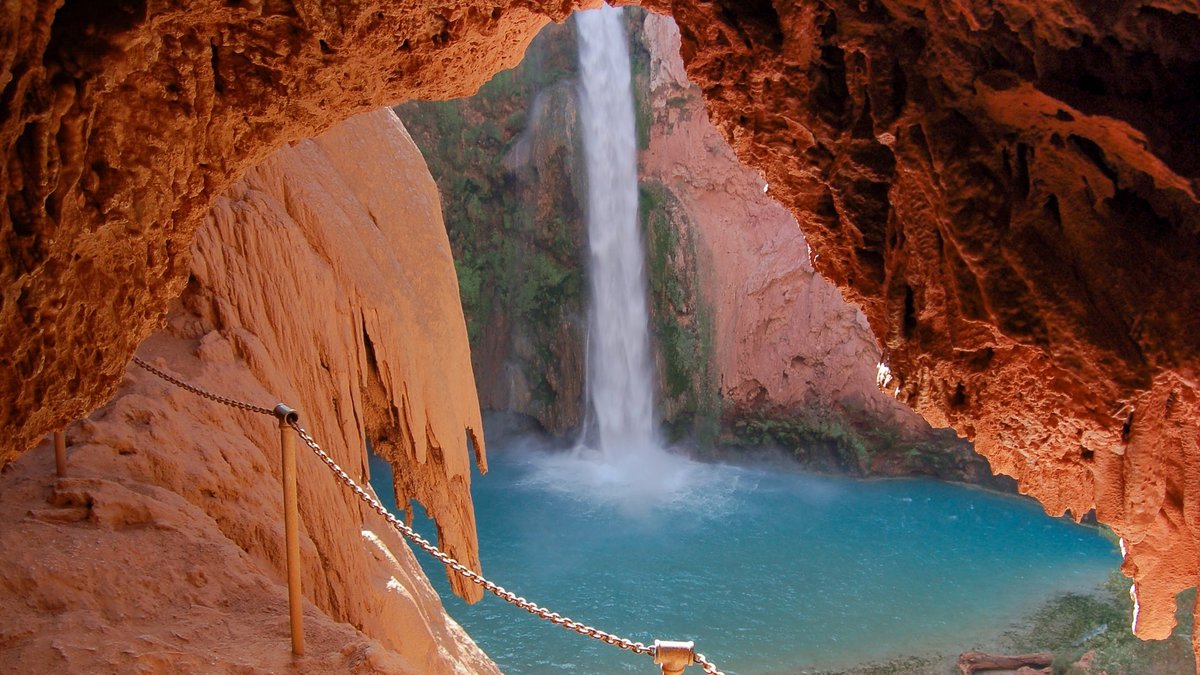
Mooney Falls is one of the most demanding waterfalls in the Grand Canyon, standing 200 feet tall and posing significant risks to hikers who underestimate its undercurrents. Located on the Havasupai Indian Reservation in Arizona, the descent requires handling through hand‑carved tunnels, gripping wet chains, and climbing wooden ladders anchored to the limestone cliff wall. Reaching the base involves an 11‑mile trek from the Hualapai Hilltop trailhead on the rim, along with an advance permit costing around $450 that typically sells out within minutes after sales open in February. The waterfall’s height surpasses that of Niagara, and its sheer drop cuts through layers of travertine and limestone that have been exposed by the Colorado River over millennia, giving the cascade a dramatic vertical profile that frames the surrounding canyon walls.
The Descent Down the Cliff Face
The climb down takes about 15 minutes, but the terrain is treacherous. Travelers must pass through two tight, hand‑carved rock tunnels before reaching the chains. Because the spray from the waterfall coats the metal in constant moisture and mud, maintaining three points of contact is critical. A series of wooden ladders anchors the final stretch of the descent. For anyone with vertigo or a severe fear of heights, the hike is ill‑advised; rescues in Havasu Canyon are complex and can be delayed, turning a fall into a life‑threatening situation. The tunnels were shaped by early laborers who cut directly into the stone, leaving a narrow passage that forces hikers to move in single file. At the tunnel exit, a pile of gloves is provided to improve grip on the chains that are bolted straight into the rock, and the slickness caused by perpetual mist demands careful hand placement. The ladders, though sturdy enough to bear weight, are deliberately spaced and can feel rickety underfoot, prompting each descent to be taken one rung at a time while constantly checking footing. Proper footwear with good traction is essential, as the combination of mud, water, and limestone creates a surface that can become unexpectedly slippery.
Powerful Undercurrents and Past Tragedies
Visitors can swim in the pools at the base, but the water poses hidden dangers. Powerful undercurrents have the ability to pull even experienced swimmers under. The site is not without history; the earliest recorded fatality was that of D.W. James Mooney, a prospector who fell in 1882 while trying to rescue an injured companion. More recent incidents include a 32‑year‑old man from Utah swept under the waterfall in 2010, a 16‑year‑old Boy Scout who drowned in 2012, and a man who broke his back near the falls in 2026.
Related: Trainer says Monk Plank Boosts Outdoor Performance
The water that gathers at the plunge pool is a vivid turquoise, a hue created by dissolved minerals that reflect the sun’s light. This striking color provides a stark visual counterpoint to the deep desert reds of the surrounding canyon, and many describe the experience of entering the pool as reminiscent of a tropical shoreline far from the arid setting. Swimmers are advised to stay clear of the immediate curtain of water, as the force of the falling cascade generates swirling currents that can form beneath the surface without visible warning. Even seasoned swimmers can be caught off‑guard by a sudden surge, so the safest practice is to remain at a distance from the plunge zone and to enter the water only after assessing the flow.
The physical challenge of the hike creates a specific kind of pressure that goes beyond simple exposure. While the vertical drop demands physical effort, the real danger often lies in the suddenness of the terrain changes and the unpredictable nature of the water flow. A slip on the chains or a misstep on a ladder can happen in an instant, leaving little room for recovery before the terrain drops away. This environment requires a total focus that few other hiking destinations demand, where a moment of distraction could turn a routine descent into a disaster.
Despite the risks, the turquoise waters provide a stark contrast to the red rock walls, offering a reward that many hikers find worth the effort.
