Natural disasters, such as intense wildfires and back-to-back earthquakes, are occurring with increasing frequency, affecting billions of people worldwide. Climate change is exacerbating these events, making it essential to implement robust preparedness and resilience measures. The impact of these disasters necessitates a proactive approach to mitigate their effects.
Portable Systems Enhance Disaster Response
Amazon has developed innovative, customizable technology systems to address the challenges posed by disasters. According to Jeffrey Schweitzer, Amazon’s disaster relief innovation lead, first responders have consistently reported difficulties in communicating, providing relief, and accessing basic resources like clean water. In response, Schweitzer and his team created compact, portable systems that can be set up in minutes.
Collaborating with nonprofit partners, Amazon designed these systems to be versatile and adaptable. The systems comprise over 10 configurations, including solar microgrids, satellite Wi-Fi, water purification devices, and terrain-mapping drones. Notably, the drone systems, which can cost up to $250,000, are provided to partners at no cost. These systems are also reusable, allowing them to be refurbished and redeployed after each use.
Read Also: Gravelanza LA Debuts Running, Music Fest in Griffith Park
The portability and versatility of these systems enable them to support a wide range of applications, from powering hospitals and emergency shelters to providing connectivity and resources for communities. For instance, a single system can sustain a 50-bed hospital for 72 hours or serve over 2,600 hot meals. Amazon has already successfully deployed these systems in response to recent disasters.
In the aftermath of the twin earthquakes in Venezuela, Amazon worked with nonprofit partners to deliver portable Wi-Fi systems, restoring connectivity to clinics, shelters, and community hubs. Similarly, in Jamaica, following Hurricane Melissa, Amazon’s portable solar batteries and satellite Wi-Fi units enabled doctors to coordinate patient care and facilitated the provision of hot meals by World Central Kitchen.
Preparedness and Practice Support Resilience
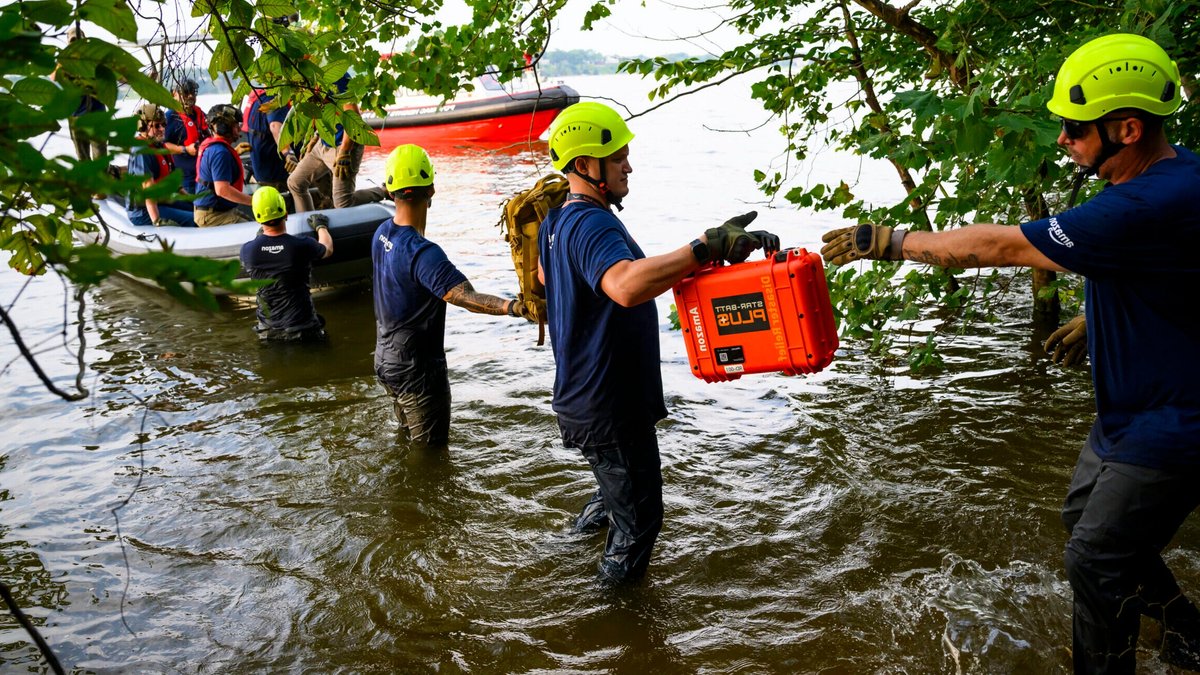
Effective disaster response requires coordination, practice, and preparation. Amazon recently conducted a training exercise in Maryland, bringing together over two dozen organizations, including local fire and rescue teams, nonprofit partners, and government agencies. The exercise aimed to test Amazon’s rapid response technology in real-world scenarios and support collaboration among participants.
Read Also: Warm fall previewed extreme weather events
During the exercise, participants engaged in hands-on missions, including a river crossing and a simulated search-and-rescue operation. Civil Affairs Major Alex Haseley, an emergency management specialist with the U.S. Army, emphasized the importance of building trust and establishing communication networks before a disaster strikes. “You don’t want everyone exchanging business cards and meeting each other in the middle of a disaster itself,” Haseley said. “Events like this, we’re getting to meet each other, we’re building some trust, we’re figuring out how to contact each other on relatively short notice.”
Abe Diaz, senior manager for disaster relief at Amazon, highlighted the company’s approach to preparedness, which involves prepositioning resources and training personnel. “It’s having everything from pallets of diapers to satellite communications ready to go,” Diaz explained. “That means the time it takes for the community to get back on their feet is shorter, and ultimately that means recovery time is shorter.”
Amazon plans to make 2,000 of these systems available to nonprofit partners in 2027, with 800 systems ready to ship from the company’s disaster relief hub in Tennessee during the upcoming hurricane season. Nonprofit organization Operation BBQ Relief utilized Amazon’s technology systems during the training exercise to prepare hot meals for dozens of people, including police officers and firefighters. Chris Huggins, head of logistics and inventory for Operation BBQ Relief, noted that “barbecue brings hope and comfort” and that sharing a hot meal can provide a sense of normalcy and dignity during difficult times.
Read Also: Man survives 100 foot cliff fall in Oregon
Since 2017, Amazon has donated and delivered over 30 million emergency supplies to support communities affected by more than 200 disasters worldwide. The company leverages its logistics network, aviation capabilities, and cloud technology to provide rapid aid to communities in crisis. As Jeffrey Schweitzer stated, “When a major disaster strikes, every minute a community spends without power, clean water, or connectivity is critical. Amazon is uniquely positioned to repurpose our existing delivery network, fulfillment hubs, and tech capabilities to get essential aid where it’s needed in hours.”
Cloud Technology Enhances Recovery Efforts
Amazon’s technology plays a key role in supporting disaster recovery efforts beyond the physical systems. The company’s cloud technology enables the rapid deployment of essential aid, including connectivity and resources. Rodney Cooper noted that during Hurricane Helene, the lack of connectivity hindered the ability of survivors to reach out to each other. Amazon’s systems help restore connectivity, which is vital for mental well-being during crises.
