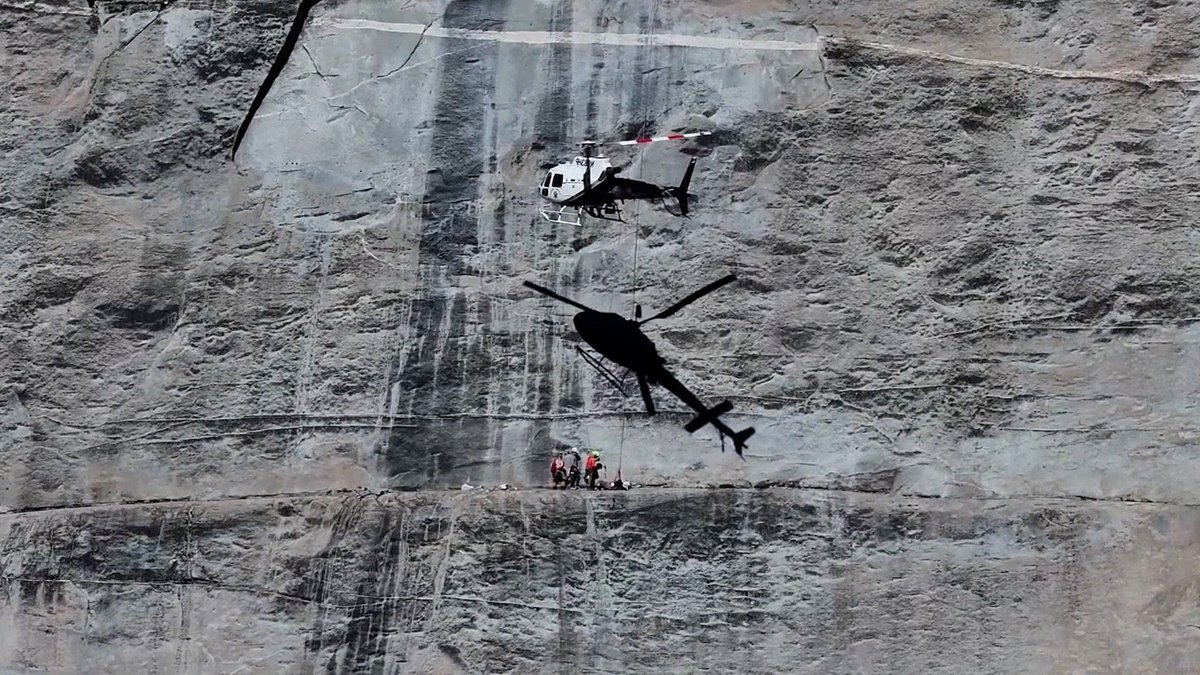
A climber suffered a severe fall from Power Dome, a 700-foot granite formation in California’s Sierra Nevada, on September 11. The incident occurred during an ascent, with the climber dropping 200 feet before landing on a narrow ledge. Heavy bleeding followed after striking the rock face, prompting his partners to use a shirt as an improvised bandage while awaiting rescue.
The California Highway Patrol (CHP) responded by deploying a helicopter, which approached within 15 feet of the cliff—a distance deemed the closest safe margin. The rescue operation employed a big-wall technique, where a technician dangled from a rope as the aircraft hovered precariously near the sheer granite. Any further approach risked a collision with the rock.
Flight officer Scott Clays, who operated the hoist, later reported the climber remained coherent and alert despite substantial blood loss. “He just seemed very tough,” Clays stated. The climber actively assisted in stabilizing himself during the extraction. Once airborne, his pain became evident. “You could see the grimace on his face,” Clays added.
Before the rescue, a drone was deployed to pinpoint the climber’s exact location and assess his condition. The Fresno County Sheriff’s Office supported the effort by managing the coordination. The helicopter crew maintained a hover for 30 to 40 seconds, battling wind to keep a safe distance while executing the lift. The climber and technician were hoisted separately before being transported to an ambulance.
Read Also: Spider Encounters Spike as Mating Season Peaks Across U.S.
Power Dome, situated near Courtright Reservoir, attracts climbers with its 40 trad, sport, and toprope routes. The area regularly sees rescues, with nearby Yosemite National Park recording over 100 climbing accidents annually. CHP teams undergo rigorous training for such operations, though this particular rescue tested the boundaries of established safety measures.
No details about the climber’s identity, age, or specific injuries have been disclosed. The incident shows the hazards of climbing in isolated, rugged environments. The CHP’s execution of this high-stakes maneuver, despite the inherent risks, demonstrated the precision and training required for high-altitude rescues.
The rescue operation required careful planning to avoid disaster. Wind conditions and the cliff’s proximity demanded split-second adjustments, yet the team managed to extract the climber without further complications. The CHP’s expertise in handling such emergencies remains critical for climbers facing life-threatening situations in remote locations.
