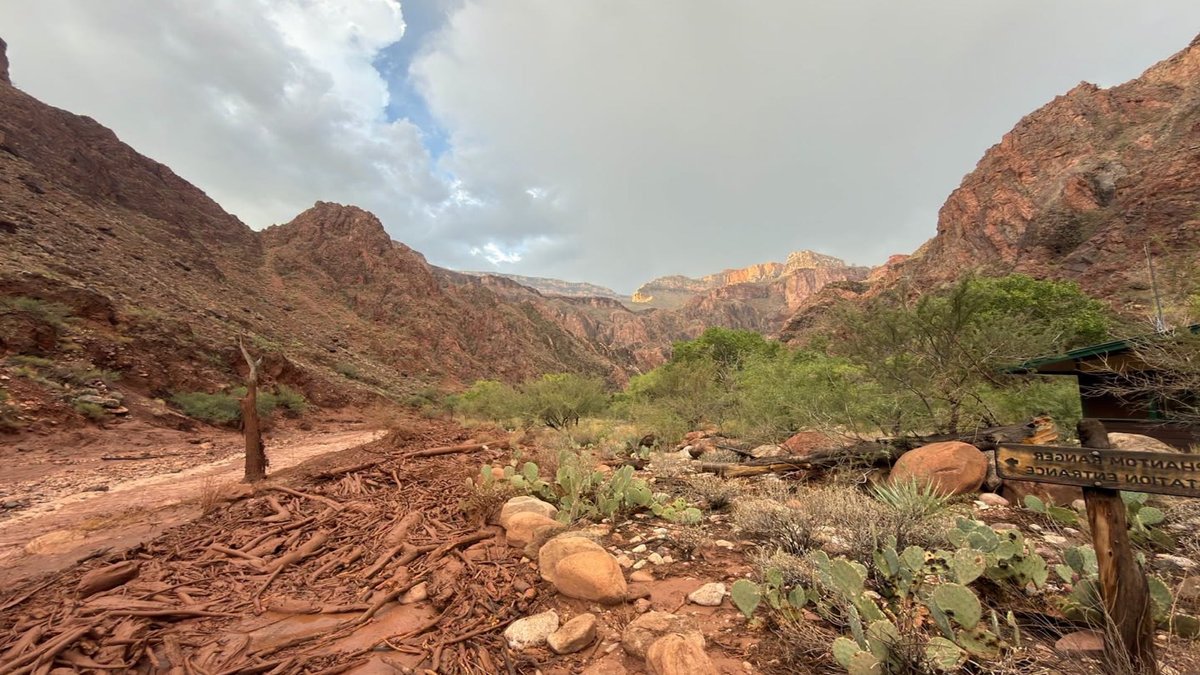
A flash flood swept through the Grand Canyon on August 29, inundating Bright Angel Canyon and striking the base‑camp lodge. One hiker, a 46‑year‑old man, was recovered dead, and more than 20 people remain unaccounted for.
Infrastructure shattered by rushing water
Rapid currents ripped apart historic footbridges that span Bright Angel Creek, leaving only rusted pylons jutting from the water. Trail sections that once guided visitors through the inner canyon are now blocked by debris and eroded banks.
All overnight accommodations in the park, including the historic El Tovar hotel and the lodge at the canyon’s base, have been closed indefinitely. The shutdown also covers the nearby trailer village and other visitor facilities.
The damage forced the evacuation of at least 62 guests from the lodge and the lower North Kaibab Trail, a 14‑mile route that descends from the North Rim. Additional evacuations were scheduled for nearby campgrounds the following day.
Search teams comb the canyon
National Park Service (NPS) crews, aided by the Arizona Department of Public Safety, have launched a coordinated search across the central inner canyon. Teams are using helicopters, ground patrols, and canine units to locate missing hikers.
Officials have asked the public to report anyone who was in the Bright Angel Creek corridor on August 29 or who held a reservation at the affected campgrounds. Tips can be emailed to [email protected] or called in at 1‑888‑653‑0009.
Information such as a person’s name, approximate location, travel plans, group size, clothing description, or last known sighting is being collected. Callers are not required to disclose their own identity.
Related: Mooney Falls Surpass Niagara Height Hike Carefully
Rescue teams have already recovered the body of the 46‑year‑old male near Crystal Rapids along the Colorado River, according to an NPS statement released on August 30.
In the meantime, the American Red Cross is providing assistance at the South Rim cafeteria, where evacuees are being housed temporarily.
River conditions have also shifted. The Colorado River was briefly closed to boaters because of floating metal structures, but the ban has been lifted after inspections cleared the waterway.
“Grand Canyon staff, together with state authorities, are continuing evacuation and response efforts while accounting for individuals who may have been in the affected area,” the agency said.
There have been no additional injuries reported beyond the confirmed fatality, according to the latest available information.
Park officials warn that more rain is forecast for August 31, which could trigger additional flash floods, debris flows, or rockfall, further complicating rescue operations.
Visitors planning trips on the river or in the backcountry are advised to check with commercial outfitters or the NPS River Permits Office before setting out.
Related: Trainer says Monk Plank Boosts Outdoor Performance
As the canyon dries, crews will begin assessing damage to utilities, water lines, and power systems that serve the remote facilities.
Future reopening dates remain uncertain; the service may close additional sections as the full scope of the destruction becomes clear.
Rescue efforts continue around the clock.
One can imagine the canyon’s recovery will be a long process, especially given the delicate balance of natural forces and human infrastructure. The sheer scale of the event suggests that rebuilding may take years, and some historic structures could be lost forever.
For background on the region’s geology and typical monsoon patterns, see the Grand Canyon entry on Wikipedia.
Authorities continue to search for the missing hikers, and updates will be provided as new information becomes available.
