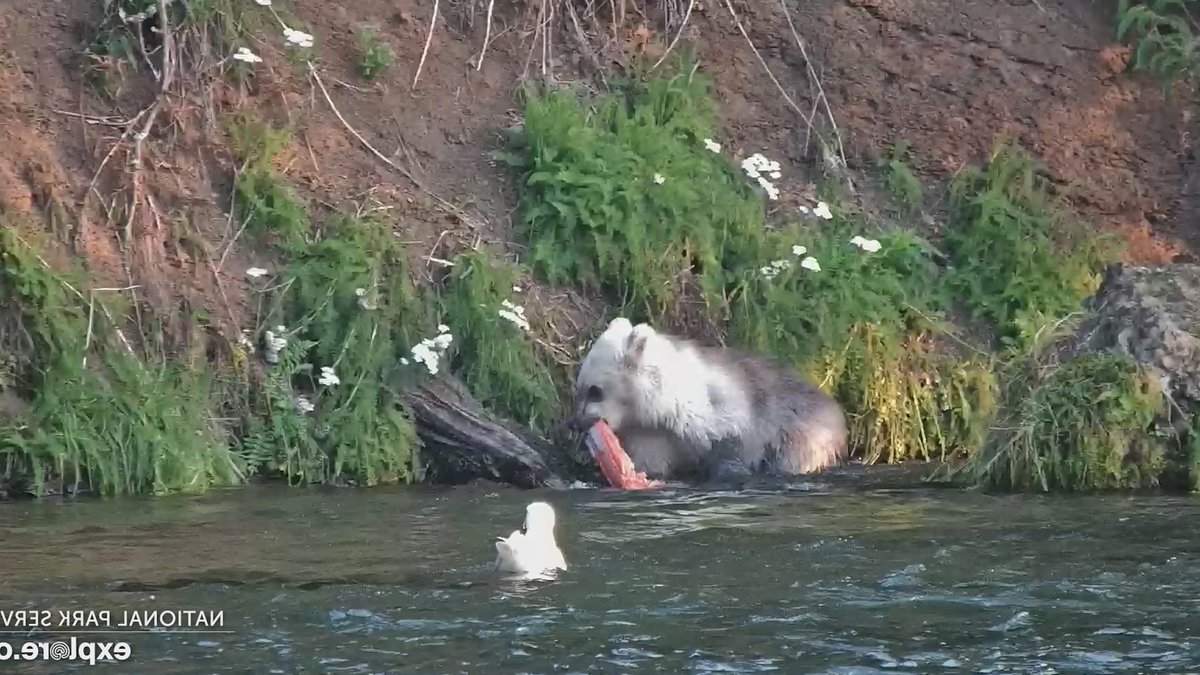
A silver-furred cub appeared on the Katmai Bear Cam in late July, drawing attention for its unusual coat. The young bear, about six months old, was first seen on July 22 in Katmai National Park and Preserve, Alaska.
Unusual fur color sparks curiosity
The cub’s pale, silvery fur led some viewers to wonder if it might be a “pizzly”—a cross between a polar bear and a grizzly. Experts say the explanation is simpler and tied to genetics.
Gordon Clagget, a spokesperson for the National Park Service Alaska office, said the coloring is likely just a natural variation. “There are many bears on the Brooks River, both male and female, with very blonde fur,” he explained. “This fur can darken as the bear ages; we won’t know for sure until the cub matures.”
Mike Fitz, a naturalist with Explore.org, which runs the bear cams, shared the same view. He noted that Katmai lies too far south of the polar bear’s current range in Alaska for a hybrid to be likely. “The cub doesn’t show signs of leucism or albinism,” Fitz said. “Its fur falls within the natural range for brown bears in Katmai, just at the lightest end of that spectrum.”
Related: Pacific Northwest Offers Best Trail Running Routes
Fitz added that similarly light-colored cubs appear at Brooks River every few years. The cub’s sex remains unknown, but viewers believe its mother is Bear 677, an adult female who has been in the area since 2025.
A record year for cubs
This summer brought an unusually high number of cubs to Brooks River. By August 10, researchers had counted over 18 families and 34 cubs, with 28 born this spring. Fitz linked the increase to a massive salmon run in 2025, which gave female bears enough fat reserves to support larger litters.
“A huge salmon run arrived in 2025 at Brooks River, along with many single female bears fishing there,” Fitz said. “The abundance of food allowed those females to enter hibernation with enough fat to sustain their litters through winter.”
Despite these challenges, the number of cubs signals a healthy ecosystem. “Bear cubs are cute and fun to watch,” Fitz said. “More importantly, they reflect abundance. Katmai hosts some of the last great salmon runs on Earth, where the richness of the environment is seen in the gifts salmon provide—including the energy mothers need to raise their young.”
Related: Sweat Science 101 Newsletter Teaches How to Train
The cub’s light fur might offer some advantages. Fitz suggested it could provide better camouflage in dim light, though food availability and maternal protection would matter more for its survival.
Katmai’s bears have gained global fame, partly due to Fat Bear Week, an annual online event where fans vote for the park’s fattest grizzly. Past champions like Otis and fan favorite Grazer are among the park’s legendary bears. With so many cubs this year, the population continues to thrive.
The silver cub stands out among the darker bears around it. Its future remains uncertain, as does the final shade its fur will take as it grows. For now, it continues to captivate viewers who follow the bears of Brooks River.
