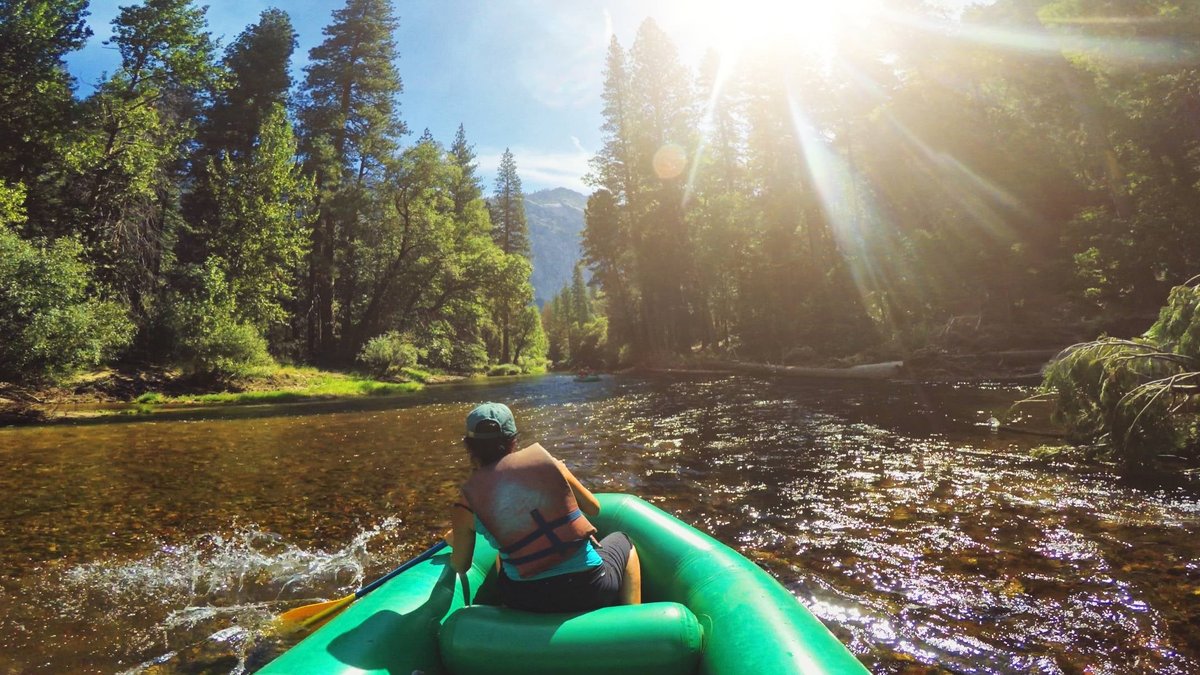
With August slipping away, the clock is ticking on the best national park water adventures before the first chill of fall arrives.
Assateague Island National Seashore: Beach and Bay Play
Spanning 37 miles across Maryland and Virginia, the barrier island is famous for its roaming wild horses and 12 miles of open‑ocean beach.
Visitors who hold an OSV permit—$110 for a year—can drive a 4WD vehicle through the Maryland side, where only 145 vehicles are allowed each day.
The limited access often leaves a stretch of sand virtually empty, ideal for a longboard ride on the steady beach breaks.
Beyond the surf, a launch at Old Ferry Landing lets kayakers glide into the marshy channels of Sinepuxent Bay, where stingrays sometimes drift just below the surface.
Guided tours and rentals are offered by a local outfit, with prices starting at $30.
Lake Crescent in Olympic National Park: Calm Paddle
Lake Crescent stretches 12 miles and plunges more than 600 feet deep, making it the largest lake in the park.
Its crystal‑clear water, free of algae thanks to low nitrogen levels, lets divers see down 60 feet in some spots.
Motorboats are limited to five miles per hour, so the surface stays smooth for kayakers.
Rent a kayak for $25 at Log Cabin Resort and head toward the Devil’s Punchbowl, a rocky alcove with an iron bridge over a turquoise pool.
Early morning paddles avoid the wind and provide a quiet, reflective experience.
Related: How to track the 2026 UTMB Mont-Blanc
Compared with earlier summers, the permit system at Assateague has become stricter, meaning early planning now feels even more essential than it did a few years back.
Redwoods National Park – Enderts Beach and Smith River
Enderts Beach sits in a remote cliffside cove, reachable after a half‑mile hike that drops through forest to sand.
The tidepools reveal sea urchins and starfish, best explored at low tide.
Experienced surfers can catch a reef‑break at mid‑tide, though strong currents and boulders make it unsuitable for beginners.
Nearby, the Wild and Scenic Smith River offers gentle Class I‑II rapids, perfect for “ducky” paddling.
Local outfit rentals and guided trips are available for those who prefer a structured outing.
Great Smoky Mountains – Deep Creek Tubing
Deep Creek on the park’s southern edge turns tubing into a whitewater sprint, with Class II drops and wave trains that soak riders.
Rentals are sold at the trailhead, or bring your own tube and launch from the confluence with Indian Creek.
The one‑mile hike upstream leads to the launch point, and there are pull‑over spots for quick swims.
After the ride, the 2.4‑mile Waterfall Loop showcases three waterfalls along easy trails.
The loop combines short climbs with views of granite cliffs and lush forest canopy.
Related: New trail vest redefines adventure gear
Glacier National Park – Flathead River Float
The Middle Fork of the Flathead River, designated Wild and Scenic, offers a three‑hour, five‑mile float through prime summer scenery.
Guided trips start at $84 per person, with paddlers mostly watching for wildlife rather than battling rapids.
Rocky beaches provide natural swim breaks along the way.
Rafting season, driven by snowmelt, runs from late May through October, making August the warmest period for the water.
Hikers can also trek to Avalanche Lake, a backcountry pool framed by towering cliffs, though the water stays cold.
Yosemite National Park – Cathedral Lakes
Two alpine lakes sit at the foot of 10,911‑foot Cathedral Peak, reachable via a four‑mile stretch of the John Muir Trail from Tuolumne Meadows.
Upper Cathedral Lake features a small, rocky beach where visitors can rest and dip into the clear, frigid water—a true cold plunge.
The trail opens after snow melt in late June and closes when snow returns in October.
Climbers can explore granite problems along the southern shore of Upper Cathedral Lake, though the area also suits casual hikers.
Even if you’re not a climber, the surrounding granite ledges invite casual scrambling, offering a different way to enjoy the alpine setting.
