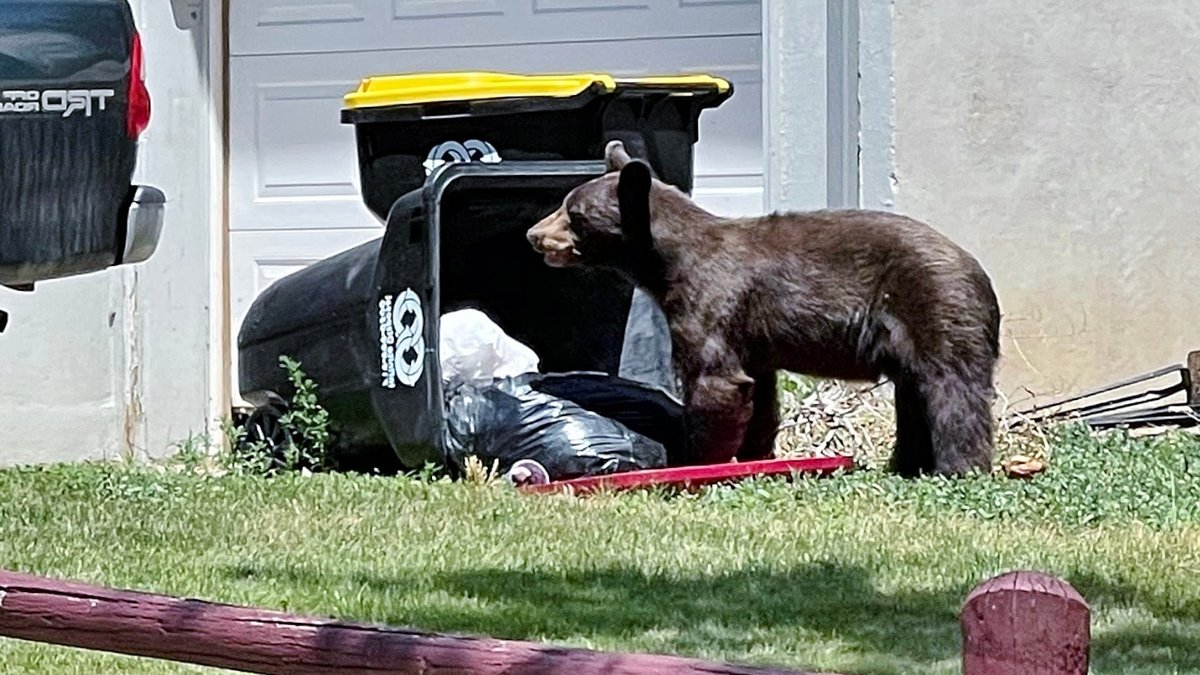
Colorado Parks and Wildlife euthanized a 300-pound black bear in Durango on September 9 after officers found the animal suffering from a fatal condition. The bear had dug a hole in a residential yard and was moaning in pain when a homeowner called for help. Officers arrived to find the bear lethargic and unable to stand, leading to a tranquilization and a difficult field necropsy.
Packed with Trash
Colorado Parks and Wildlife Officer John Livingston described the scene once the bear was sedated. He said the stomach was immediately distended, and officers began pulling out cleaning wipes and full trash bags that still contained the drawstrings. The necropsy revealed the animal’s intestines were packed with non-flushable wipes and whole plastic bags, a condition that caused severe distress and led to the decision to euthanize.
The bear’s death highlights the severity of food scarcity across Colorado this year. Drought conditions and a late spring freeze devastated natural food supplies, forcing bears to seek alternative sources. When those alternatives are residential garbage and unsecured human food, the risks to the animals increase dramatically.
Record Conflicts
Colorado Parks and Wildlife has logged over 8,000 bear reports so far in 2026, the most the agency has ever recorded. Livingston noted that euthanizations are up 2.7 times the five-year average, with over 294 bears put down this year compared to just 98 in all of 2025. The agency’s southwest Colorado lead says the conflict is driven by the bears’ reliance on human food sources and the lack of natural forage.
Livingston explained that bears do not hibernate based on the calendar. They enter dens when food becomes unavailable, but a steady stream of trash and pet food can keep them active year-round. In some areas, bears have been known to never den because they continue to access calories that allow them to survive the winter.
Read Also: Chattanooga’s Top Outdoor Adventures Revealed
This pattern is becoming more common as bears learn that unsecured garbage provides a more reliable and easy meal than foraging in the wilderness. Once a bear associates a home with food, it often returns repeatedly, increasing the likelihood of dangerous encounters.
Caution for Residents
With conflicts at a peak, Colorado Parks and Wildlife is urging residents to secure all food and trash. Many communities already require bear-resistant containers, but Livingston says those are ineffective if not cleaned and locked nightly. He also warned that leaving windows open or vehicles unlocked invites bears inside, and residents should be prepared to haze animals that approach their homes.
To deter bears, residents can make noise by banging pots and pans or using an airhorn. Livingston suggests recording the animal while making noise to send a clear message that the bear is unwelcome. The goal is to prevent bears from becoming comfortable near homes, which is vital for their survival and public safety.
Bears need to associate human areas with danger, not food. Securing attractants and responding firmly to their presence are key steps to reducing conflicts.
The agency emphasizes that these measures are not just for the bears’ protection but also for the safety of residents. As natural food sources remain scarce, proactive steps are essential to prevent further incidents.
Read Also: ICE Confirms Cooperation With Forest Service After Campers Arrested
Colorado Parks and Wildlife continues to monitor the situation, with efforts focused on education and enforcement. The agency’s goal is to reduce bear-human interactions and ensure both parties can coexist safely.
The bear euthanized in Durango serves as a stark reminder of the consequences when prevention fails. Its death shows the urgent need for residents to take action now.
Colorado’s wildlife officials remain committed to protecting both bears and communities. Their message is clear: securing food and trash is not optional—it’s a matter of life and death.
The state’s bears are adapting to survive, but their reliance on human sources is unsustainable. Without immediate changes, more tragic outcomes are inevitable.
As winter approaches, the race is on to educate and equip residents with the tools to keep bears safe and wild. The next few months will be critical in determining the future of bear-human coexistence in Colorado.
