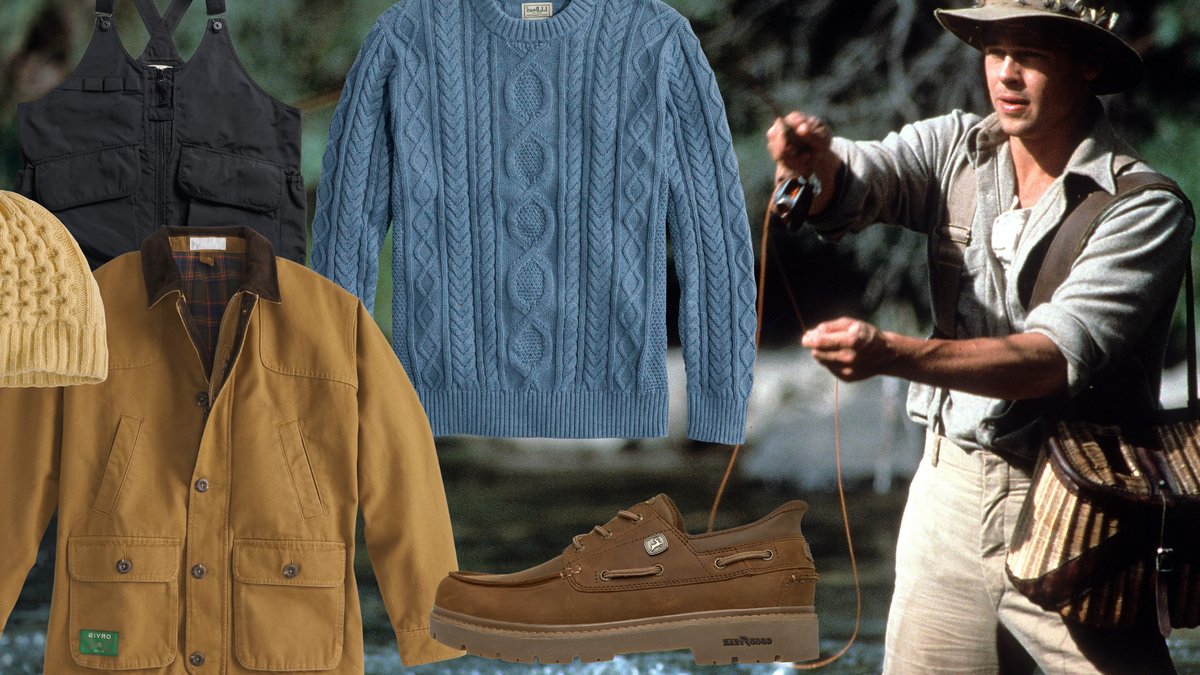
The enduring appeal of fisherman core lies in its sheer utility, a practical aesthetic that has moved from the docks to the sidewalks. Apparel designed for fishing must constantly withstand harsh conditions, heavy moisture, and the need for free-flowing movement alongside convenient equipment storage. Even without recent practice, many people can assemble a functional outfit for a day on the water from standard wardrobes, mixing waxed-canvas work jackets with bucket hats and cargo pants.
From Docks to Designers
“Fisherman core,” like the industry it mimics, encompasses a wide range of forms and functions. Natural fabrics with pronounced textures call back to a time when cable-knit sweaters and rolled beanie caps were the best way to keep warm through a harsh New England winter. Vests jam-packed with pockets, wide hats, and quick-dry fabrics recall a quiet day wading through the river. Brands, from mainstream labels to high-end fashion houses, introduced designs last year that are as at home on the streets of Manhattan as on a dock in Maine.
Sperrys have crawled out of the frat basements of the 2010s and found appeal among fashion influencers. The world of streetwear has since caught up, with pop-ups bringing niche Japanese fly-fishing brands to the States, and American angling outfitters moving to appeal to a non-fishing crowd. A June 2025 Washington Post article chronicled this convergence. Even Drake released a line of “fly-fishing-inspired urban wear” in October 2024 with Nike sub-label Nocta, including fly reels. Almost two years later, cropped vests with boxy pockets are still everywhere.
Related: History Meets Landscape at Great Plains Park
Historical Roots and Current Trends
The reality is, none of this is new. Most fisherman core garments originated from the naval uniforms and maritime workwear of yore. Fly-fishing giant Orvis expanded into apparel in the 1940s, and these designs have been circulating through trend cycles ever since. In Vogue’s October 1995 issue, a model stands in waders and a multi-pocketed coat, fishing rod in one hand, Northern Pike in the other. Junya Watanabe’s buzzy Spring 2012 menswear collection featured ubiquitous bucket hats and waxed jackets with toggle closures.
This look isn’t just about looking the part; it offers a tangible advantage for anyone who spends time outdoors. The design philosophy prioritizes utility, creating clothing that serves a purpose beyond simple decoration. Whether one plans on reeling in a catch or is still singing the sea shanties that took over TikTok in 2021, there’s a look out there for you.
